GarageDemolitionin Milwaukee
Got a city order or unsafe garage? We handle permits, demolition, debris haul-away, and final inspection closeout.
Permit help • Debris haul-away • Final inspection closeout
Got a Raze Order or Repair Order from Milwaukee DNS?
You're in the right place. Here's exactly what happens next.
If the City of Milwaukee Department of Neighborhood Services (DNS) has posted a raze order, repair order, or condemnation notice on your garage, you're not alone, and you're not overreacting by trying to handle it fast. Most of the leaning, sagging, and structurally compromised garages we tear down are sitting under one of these orders. The clock is real, and the consequences of ignoring it are worse than most homeowners realize.
Bring the order to the site visit. We read it, we plan around the deadline, we pull the permit, we do the demolition, and we coordinate the final inspection so DNS officially closes the case. From the city's side, the file goes from "open enforcement action" to "resolved" without you ever having to stand in line at a downtown office.
We pull the permit
$100 down covers the City of Milwaukee demolition permit. We file the paperwork, you don't talk to DNS.
We tear it down safely
Even when it's leaning toward a neighbor's house. Controlled-drop demolition with full haul-away.
We close the case
We coordinate the final inspection ourselves. The case officially closes when we're done.
If your order has a deadline, call us today
Milwaukee DNS sets different deadlines depending on severity. Some orders demand action in weeks, not months. We treat raze-order jobs as priority work. Site visits within days, demolition typically scheduled inside two weeks of permit issuance. The city won't extend the deadline because you're "thinking about it." They will accept progress.
Call 414-533-8000 for Priority SchedulingWhy Leaning Garages Are Actually Dangerous
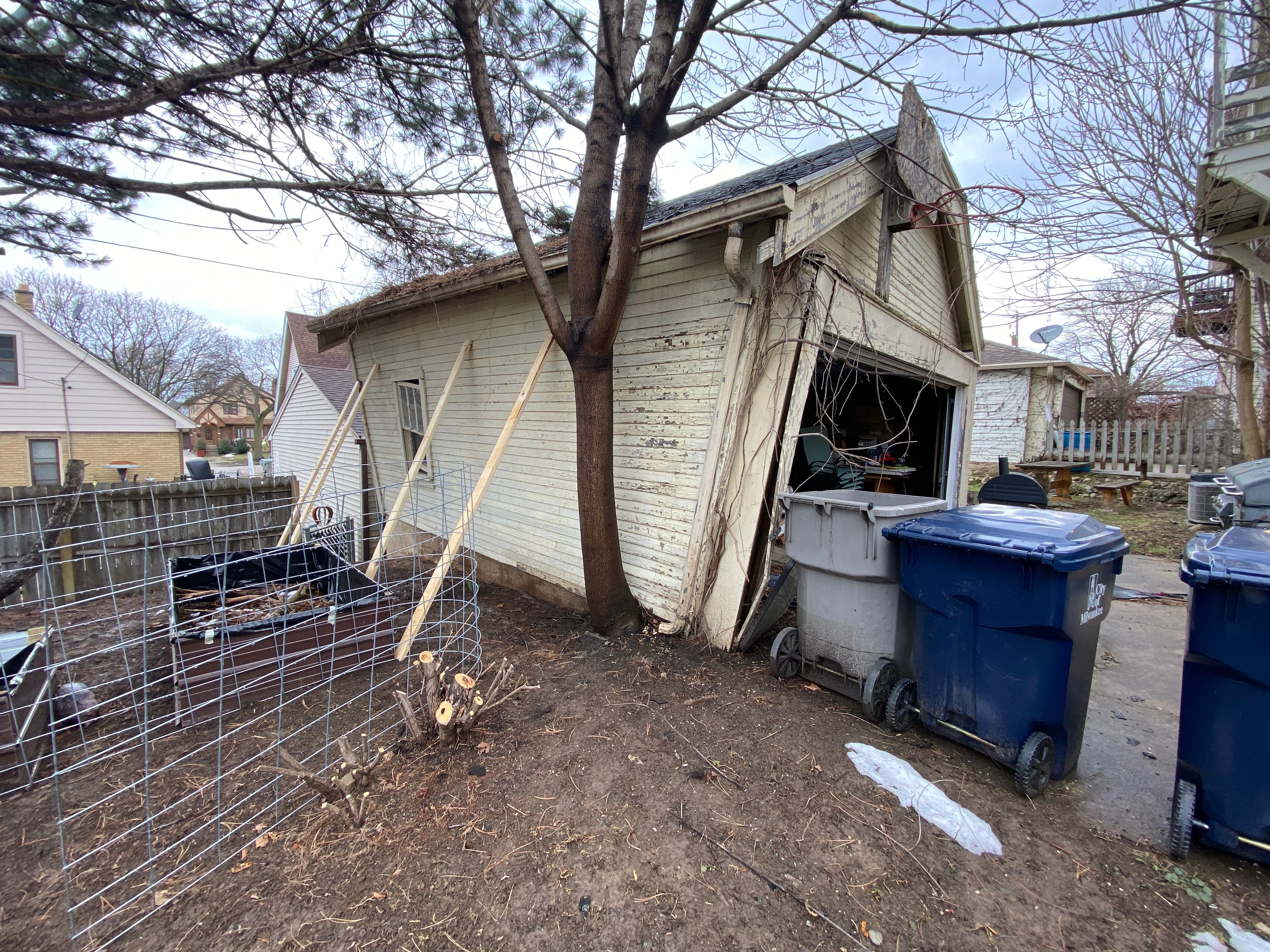
If your garage is visibly leaning, you're not overreacting by being worried. You're paying attention. A leaning garage is a structure that's losing its battle with gravity, and Wisconsin winters speed up the loss every single year. Here's why the City of Milwaukee takes these structures seriously, and why you should too.
Lean accelerates
Once a wood-frame garage starts to lean, the lean compounds. Each freeze-thaw cycle, each heavy snow load, each season of foundation settling pushes the structure further off plumb. A garage that's a few inches out of alignment this fall can be a foot out by spring. Garages don't get better.
Collapse risk is real
Milwaukee sees garage collapses every year, especially after big snow events. A wood-frame garage that's been compromised by rot, termites, or sill-plate failure can come down with surprisingly little warning. Anyone or anything inside or beside the structure when it goes is in serious danger.
You're liable for what falls
If your leaning garage falls onto a neighbor's house, fence, vehicle, or person, you are the responsible party. Most homeowner insurance policies exclude or significantly limit coverage for damage caused by a structure the city had already cited as unsafe. The city order is on record. The lawyers will find it.
Children and curiosity
Leaning, half-collapsed garages are an attractive nuisance. Kids climb in. Teenagers hang out. Animals nest. The city has seen the worst-case versions of those stories more than once, which is part of why DNS doesn't mess around with raze orders.
The good news: handling a leaning garage is a solved problem. Site visit, plan, permit, demolition, cleared lot. The fear is the hardest part. The work itself is straightforward.
Milwaukee's Garages Have a Reputation. We Know It Well.
A huge share of Milwaukee's housing stock was built before 1950. The detached garages that sit at the back of those lots were built to match: wood frame, single-car or two-car, with shallow concrete pads and decades of Wisconsin winters working on them. Most of them have outlived their useful life by twenty or thirty years.
By the time we get a call, the garage is usually in one of four states: leaning visibly toward a property line, sagging in the roof from snow load, half-collapsed already, or under a city order to come down. Sometimes a homeowner just wants the eyesore gone before they sell. Sometimes the city has stepped in and given a deadline. Either way, the next step is the same: somebody needs to take the structure down safely without taking a neighbor's house, garage, or fence with it.
That's what we do. UJUNKY is a demolition contractor first. The junk removal name is older than the company's current focus. Today, garage teardown is one of the things we do most often, and we've gotten very good at the part most people underestimate: figuring out how to drop a structure that's already trying to fall on its own without making the situation worse.
How a Garage Demolition Actually Goes
We've broken down hundreds of garages in Milwaukee. The job almost always follows the same six-step pattern. Knowing what each step looks like ahead of time makes it easier to plan around, especially when there's a city deadline involved.
Site visit (bring the order)
We come out and look at the garage in person. This isn't a sales pitch. It's an engineering assessment. We walk the structure, check what's attached or close to it (neighboring garages, fences, decks, sheds, gas lines, power drops, alley walls), and identify where the lean or weakness is so we plan around it. If you have a raze order, repair order, or condemnation notice, bring it. We read the deadline, the cited issues, and any specific city requirements so the rest of the process aligns with what DNS needs.
The plan
Back at the shop, we work out exactly how the garage will come down. Which side gets pulled first. Where the excavator sits. How we protect the neighbor's property. Whether we have to take a section of fence down to get equipment in (and put it back). For tight Milwaukee city lots, which is most of them. This planning is the difference between a clean job and an expensive insurance claim. We present the plan, the price, and the timeline together so you see the whole picture at once.
$100 down, permit included
To lock in the schedule, we collect a $100 down payment. That covers the City of Milwaukee demolition permit. We pull it, we file it, we handle the paperwork. You don't need to call the city, you don't need to fill out forms, you don't need to know which department handles what. After the permit is in hand, we coordinate a demolition date that works for both sides. If you have a raze-order deadline, we schedule against it.
Demolition day
We show up with the equipment and crew the plan calls for. A typical single-car or two-car wood-frame garage comes down and gets loaded out in part of a day. Brick or concrete-block garages take longer because the material is heavier and slower to break down. Either way, by the time we leave, the structure is gone, the debris is hauled off, and the slab is exposed. You don't have to be on site. Most of our customers go to work and come home to an empty backyard.
We close the case with DNS
For jobs under a raze order or condemnation notice, this step matters more than the demolition itself. After the structure is down, we coordinate the final inspection ourselves. The DNS inspector confirms the work is complete and per code, and the case officially closes in the city's records. You don't have to chase down the inspector. You don't have to figure out which department handles closeout. From your perspective, the order shows up in the mail, you call us, and a few weeks later it's resolved, with no further action required from you.
The slab decision (optional)
Once the garage is down, the concrete slab is still there. You have a choice. Most homeowners leave it: a flat concrete pad makes a great parking surface, basketball pad, or future garage foundation. Some want it broken up and removed because they're landscaping, putting in a patio, or just want grass. We can do either. If we take the slab out, we break the concrete, load it, haul it away, and leave the area rough-ready for the next step. Finished dirt, topsoil, and grass are usually handled by a landscaper.
Concrete driveway and garage slab removalHow Much Does Garage Demolition Cost in Milwaukee?
Here's something that surprises people: garage demolition pricing is mostly about size and material, not about how leaning, dangerous, or run-down the structure is. A leaning garage isn't priced higher than a sound garage of the same size. A garage under a raze order isn't priced higher than the exact same garage without one. Lean and condemnation create urgency to get the work scheduled. They don't push the bill up.
Standard two-car wood-frame garage
The most common job we do. Typical price range: $3,290 – $3,890. This is what the majority of Milwaukee homeowners are looking at, and a leaning two-car wood garage falls squarely in this range.
Single-car wood-frame garage
Smaller and faster. Typical floor: $2,800 – $2,900.
Brick or concrete-block garage
Heavier material, more debris weight to dispose of, slower to break apart. Typical range: $4,290 – $8,000 depending on size.
Two-story or tall-ceiling garage
Garages with a second story (often used as workshops, storage, or coach houses) are substantially more material than a standard garage. Typical price: around $8,000. Same for garages with unusually tall ceilings, gambrel-style roofs, or oversized footprints.
Three-car garage
Wood-frame three-car garages add square footage and slab area but follow the same pricing logic as two-car. Plan on roughly 25–40% above the two-car range, depending on construction.
If you've been Googling "leaning garage demolition cost Milwaukee" and worrying that your specific situation is going to land at the high end of every quote, take a breath. The vast majority of garages we tear down are leaning, and they fall squarely in the ranges shown above. Lean doesn't push the price up.
What we don't do is play games with the number. The price you see in the plan is the price you pay. The $100 down covers the permit. There are no surprise debris fees, no "oh, the disposal cost more than we thought" calls at the end. If you're comparing quotes, ask the other contractor whether their number includes the permit, the haul-away, AND the final inspection coordination. A lot of them only do the demolition and leave the city closeout to you.
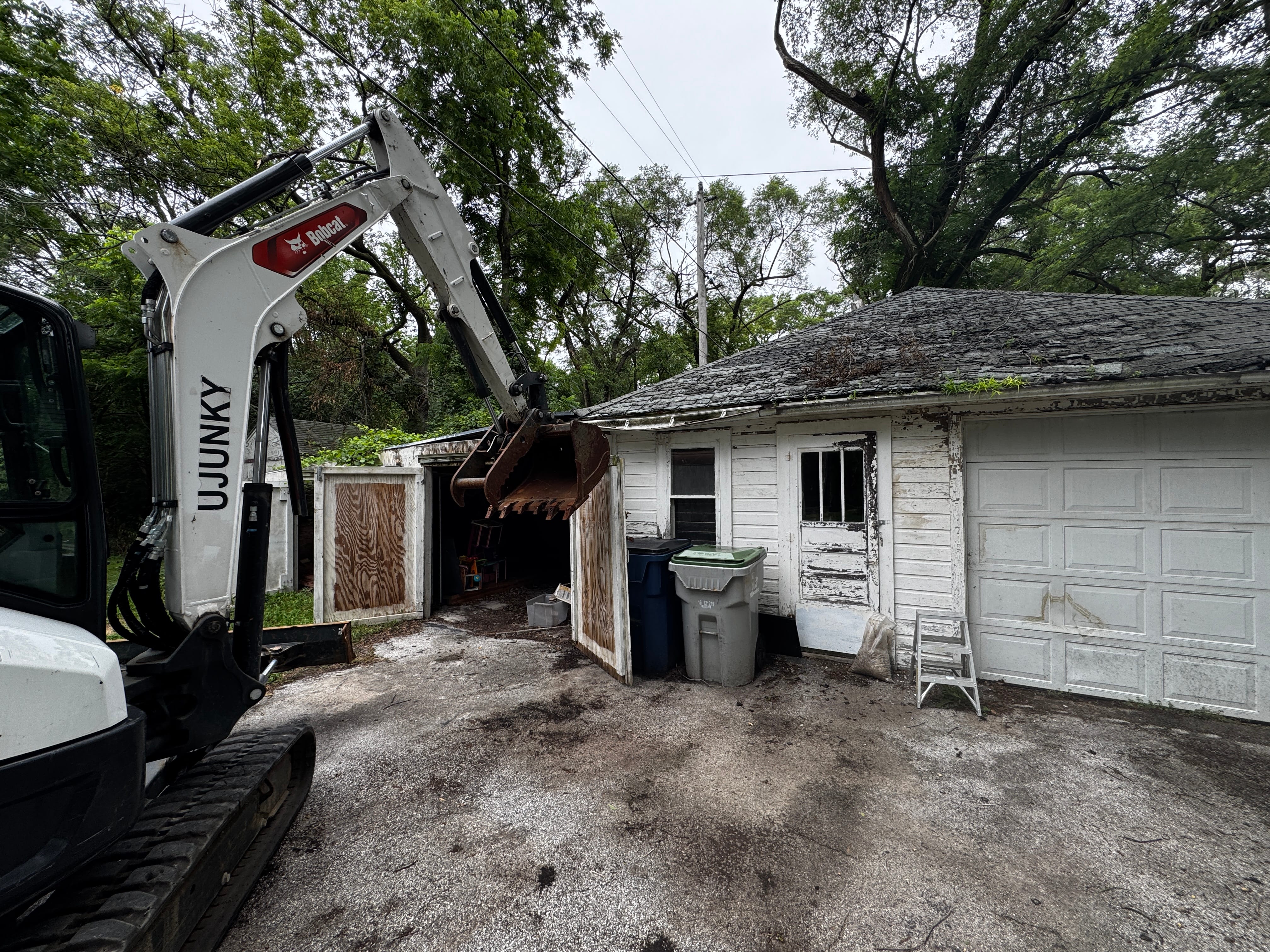
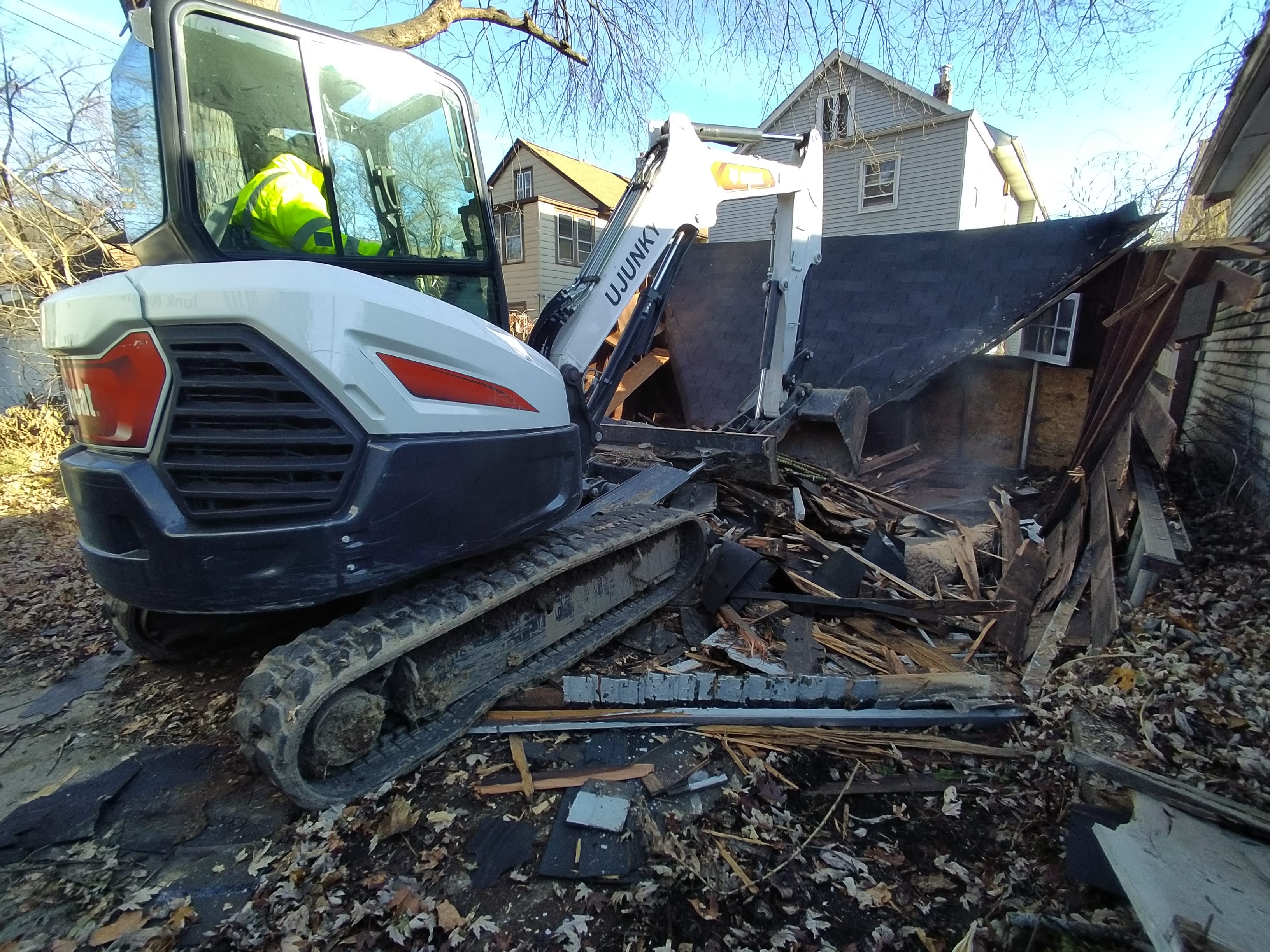
Recent Milwaukee garage demolitions: controlled teardown and clean, ready-for-next-step lot outcomes.
What Actually Determines Your Price
We're transparent about what drives cost up. Five factors matter, and the first three account for the vast majority of pricing differences between jobs. None of them have anything to do with how compromised the structure is.
1. Size and number of stories
This is the single biggest cost driver. A standard one-story two-car wood-frame garage sits in the $3,290–$3,890 range. Add a second story (like a coach house, an upstairs workshop, or a garage with finished living space above) and you're closer to $8,000. There's roughly twice the material to demolish and haul. Three-car garages, taller ceilings (10–12 feet vs. standard 8 feet), and gambrel-style roofs all bump the size up too.
2. What the garage is made of
Wood-frame is the standard and the cheapest to demolish. Brick and concrete-block garages run substantially more. The material is heavier, slower to break apart, and produces more debris weight to haul away. Disposal weight is a real cost, not a hypothetical one. A brick or concrete-block garage typically runs in the $4,290–$8,000 range depending on size, vs. $3,290–$3,890 for the same-footprint wood version.
3. Whether we can get equipment in
Milwaukee city lots are tight. Many garages sit at the back of long, narrow lots with one alley access and tall fences in the way. Whether our excavator and dump truck can reach the garage cleanly determines whether we work efficiently or work by hand. Tight access can add a meaningful amount of labor time to an otherwise simple job. If we have to take down and rebuild a fence panel to get equipment in, that's part of the conversation during the site visit.
4. Whether you want the slab out
Removing the concrete slab is an optional add-on. Most customers leave it. If you want garage slab removal: either to landscape, to install a patio, improve drainage, or prep for new construction. We can break it out and haul it away as part of the same job. The cost depends on the slab's thickness, reinforcement, and footprint.
5. Whether you want the slab removed AND fill brought in
If you also want fill dirt and topsoil brought in after slab removal, typical for landscaping or replanting where the garage used to be. That's usually a separate job we don't take on. Most customers contract that to a landscaping company who specializes in it. We focus on the demolition side.
Why your garage's condition isn't on this list
Lean, structural compromise, raze-order status, and severity of damage all change how we plan and sequence the demolition. They don't change the price. We tear down severely compromised garages every week using the same equipment and the same crew. The disposal weight, labor hours, and material category are what we charge for, and a leaning two-car wood garage produces the same debris and takes the same crew time as a structurally sound two-car wood garage. Don't assume your job will cost more because your situation feels worse.
Milwaukee Demolition Permits & Raze-Order Compliance
The City of Milwaukee requires a permit before any garage can be demolished. This is enforced by the Department of Neighborhood Services (DNS), which is also the department that issues raze orders, repair orders, and condemnation notices. If a garage is being torn down without a permit, the city can stop the work and assess fines.
The permit isn't complicated, but it does require showing the property address, the structure being demolished, contractor licensing, and proof of insurance. The reason most homeowners don't pull the permit themselves is that the city wants the demolition contractor's information on it anyway, and the licensing/insurance documentation is something only a contractor can provide. Pulling it as a homeowner usually adds days to the timeline and doesn't save any money.
We pull the permit on every job. The cost is included in the $100 down payment. From your side, the permit just appears: no trips downtown, no forms, no follow-up calls. We post it at the job site on demolition day per city requirements, and we close it out properly when the work is complete.
For jobs under a raze order: the same permit covers the demolition, but there's an extra step at the end, the final inspection. After the structure is down, a DNS inspector has to verify the work is done before the order is officially resolved in the city's records. We coordinate that inspection ourselves on every raze-order job. From your perspective, the case opens when DNS posts the order, and it closes when we finish. You don't have to call inspectors, drop in at the city offices, or chase paperwork.
For a deeper dive into how demolition permits work and what to expect, see our Milwaukee demolition permits guide. If your garage is already under a city order, our garage condemnation response page covers the full process from the city's side.
Permit planning
Understand demolition paperwork before the job starts
Need to understand permits, utility disconnects, and inspection paperwork for a larger structure? Review our step-by-step demolition permit process for house and building demolition projects.
Review our step-by-step demolition permit processGarage pricing
Want the price range first?
We have a dedicated page that explains garage demolition cost in Milwaukee, what changes the number, and what does not.
If You Have a Deadline, Don't Wait
Milwaukee DNS doesn't extend deadlines for homeowners who are still shopping around. They will accept progress. A permit pulled, a contractor scheduled, a demolition date set. The fastest path from "I got an order" to "the city closed the case" starts with a phone call. Site visits within days. Permits same week. Demolitions typically inside two weeks. Final inspection coordinated by us.
Garage Demolition FAQ
Detached garage demolition
Single-car, two-car, and larger detached garages are the core of our Milwaukee garage demolition work, including full teardown, haul-away, and site cleanup.
Condemned garage removal
If the city has marked the garage unsafe, we review the notice, plan the teardown, pull the permit, and coordinate the final inspection needed to close the case.
Raze-order garage demolition
Raze-order garage jobs get priority because the deadline matters. Bring the order to the site visit so the plan lines up with the city file.
Leaning garages
Leaning garages need controlled sequencing around the direction of failure, neighboring property, fences, alleys, and equipment access.
Wood garages
Most Milwaukee detached garages are older wood-frame structures. We plan for rot, roof sag, sill failure, and debris loading before demolition day.
Brick/block garages
Brick and concrete-block garages are heavier and slower to break apart, so access, debris staging, and disposal weight all matter during the review.
Slab questions
The garage structure can come down while the slab stays, or the slab can be removed as a separate scope if you are landscaping or rebuilding.
Tight access
Milwaukee lots often mean alley access, narrow side yards, overhead lines, and close neighbors. We review the access path before committing equipment.
Debris cleanup
Garage demolition includes hauling the structure debris away and leaving the area cleaned up for parking, sale, landscaping, or the next contractor.
Do you offer financing?
Yes. You can pay monthly through Sunbit or Klarna when you pay the invoice. Pick "Pay monthly" at checkout, answer a few questions, and get an answer in about a minute. Sunbit spreads it over up to 18 months and covers jobs up to $19,999. Klarna goes up to 36 months. There is no extra charge from us for paying this way.
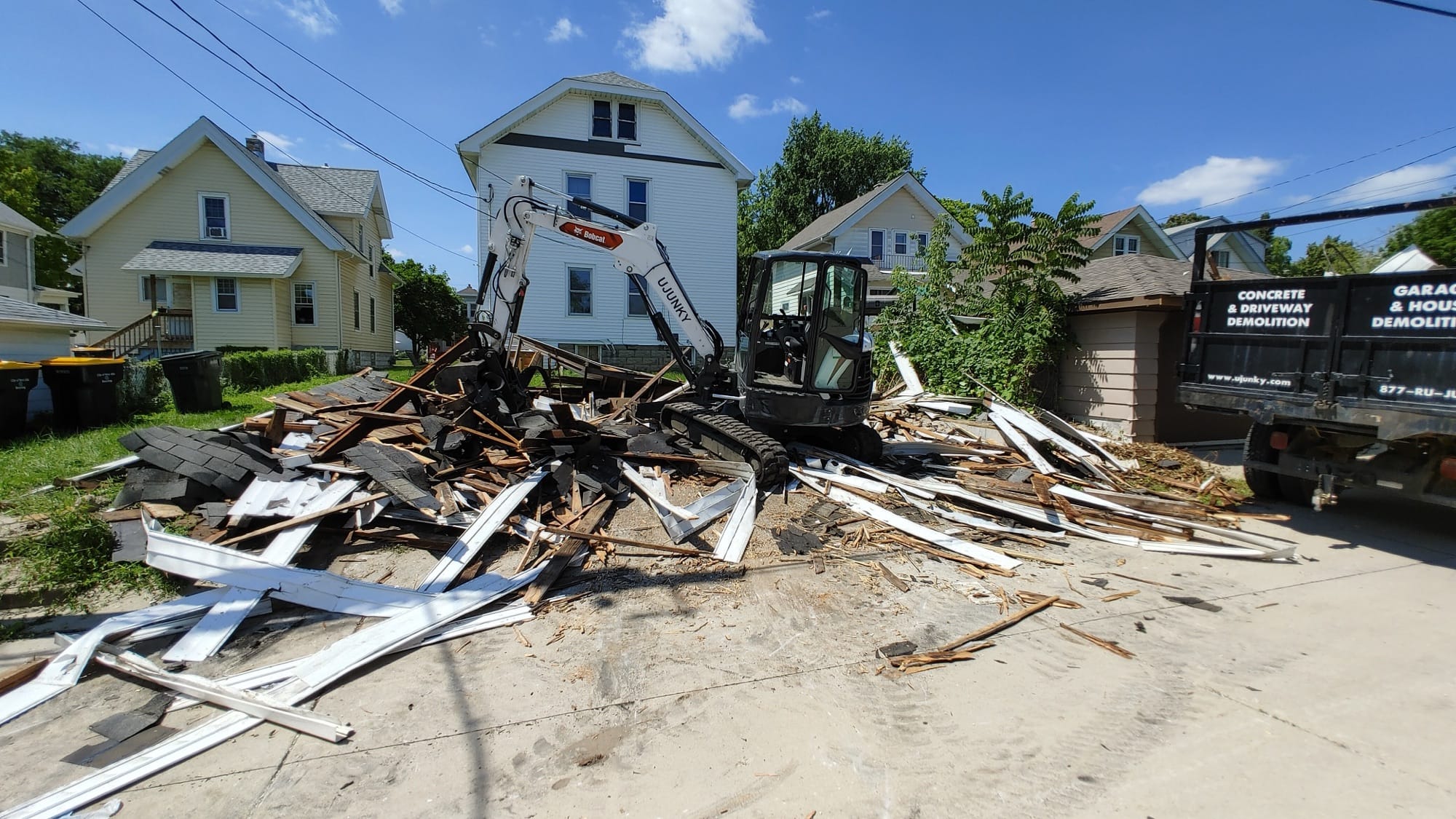
Proof From Real Milwaukee Garage Demolition Projects
Types of Garage Demolition Projects We Handle
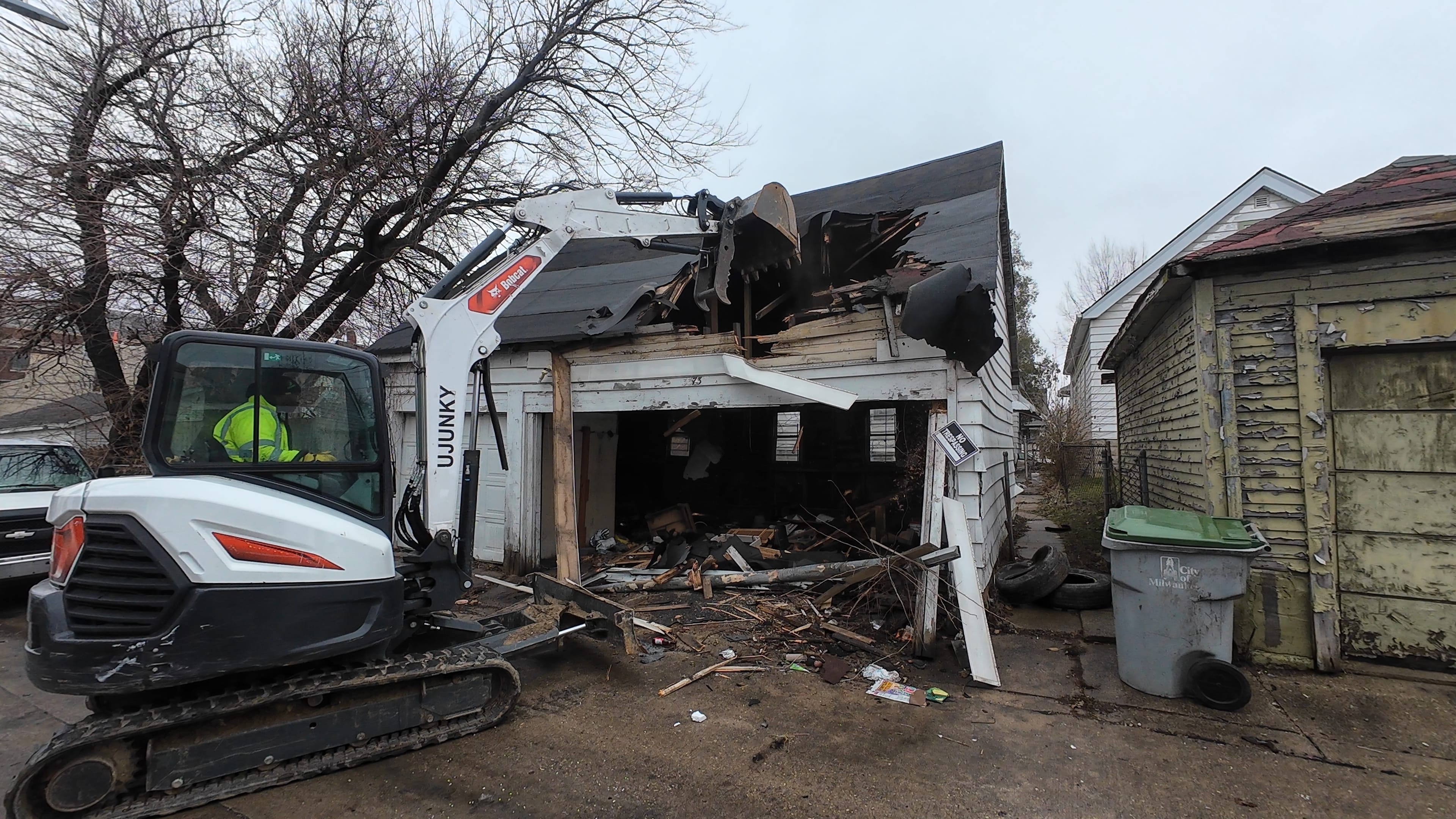
Across Milwaukee we see the same handful of garage situations over and over. Here are the most common ones we get called for:
Raze-order garages
DNS has issued a formal demolition order. Deadline is real. We handle permit, demo, and final inspection.
Repair-order garages
DNS gave you a choice: fix it or remove it. For most older garages, demolition is the cheaper, faster path.
Leaning garages
Visibly out of plumb, accelerating each season. Same pricing as a sound garage of the same size.
Collapsing or partially collapsed garages
Roof failure, sill-plate rot, walls separating from the slab. We finish what gravity started.
Fire-damaged garages
Insurance claim closed, structure needs to come down.
Condemned garages
City has formally declared the structure unsafe for occupancy or storage.
Pre-sale teardowns
Eyesore garage hurting curb appeal before listing.
Investor and landlord teardowns
Removing problem structures from rental properties.
Two-story and coach-house garages
Garages with finished or unfinished second stories. Bigger job, $8,000 range.
Brick and concrete-block garages
Heavier construction, more time, $4,290–$8,000 range.
Three-car garages
More material, more slab area, but same process.
Detached garages on tight city lots
Alley access, neighbor proximity, tight clearance. Our specialty.
Garage Demolition Details Milwaukee Homeowners Ask About
Detached garage demolition
Single-car, two-car, and larger detached garages are the core of our Milwaukee garage demolition work, including full teardown, haul-away, and site cleanup.
Condemned garage removal
If the city has marked the garage unsafe, we review the notice, plan the teardown, pull the permit, and coordinate the final inspection needed to close the case.
Raze-order garage demolition
Raze-order garage jobs get priority because the deadline matters. Bring the order to the site visit so the plan lines up with the city file.
Leaning garages
Leaning garages need controlled sequencing around the direction of failure, neighboring property, fences, alleys, and equipment access.
Wood garages
Most Milwaukee detached garages are older wood-frame structures. We plan for rot, roof sag, sill failure, and debris loading before demolition day.
Brick/block garages
Brick and concrete-block garages are heavier and slower to break apart, so access, debris staging, and disposal weight all matter during the review.
Slab questions
The garage structure can come down while the slab stays, or the slab can be removed as a separate scope if you are landscaping or rebuilding.
Tight access
Milwaukee lots often mean alley access, narrow side yards, overhead lines, and close neighbors. We review the access path before committing equipment.
Debris cleanup
Garage demolition includes hauling the structure debris away and leaving the area cleaned up for parking, sale, landscaping, or the next contractor.
Before, During & After Garage Removal
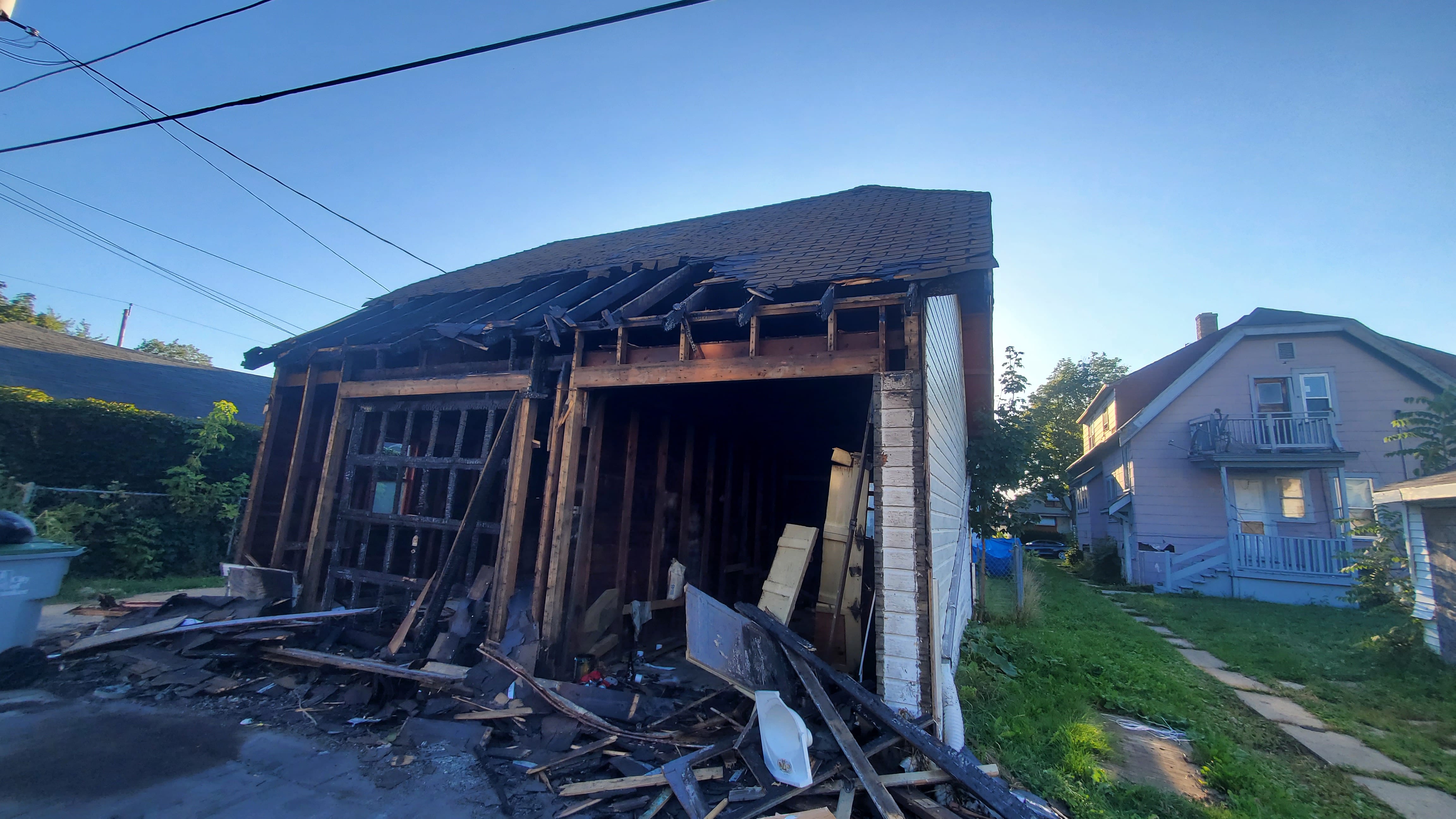
BEFORE DEMOLITION
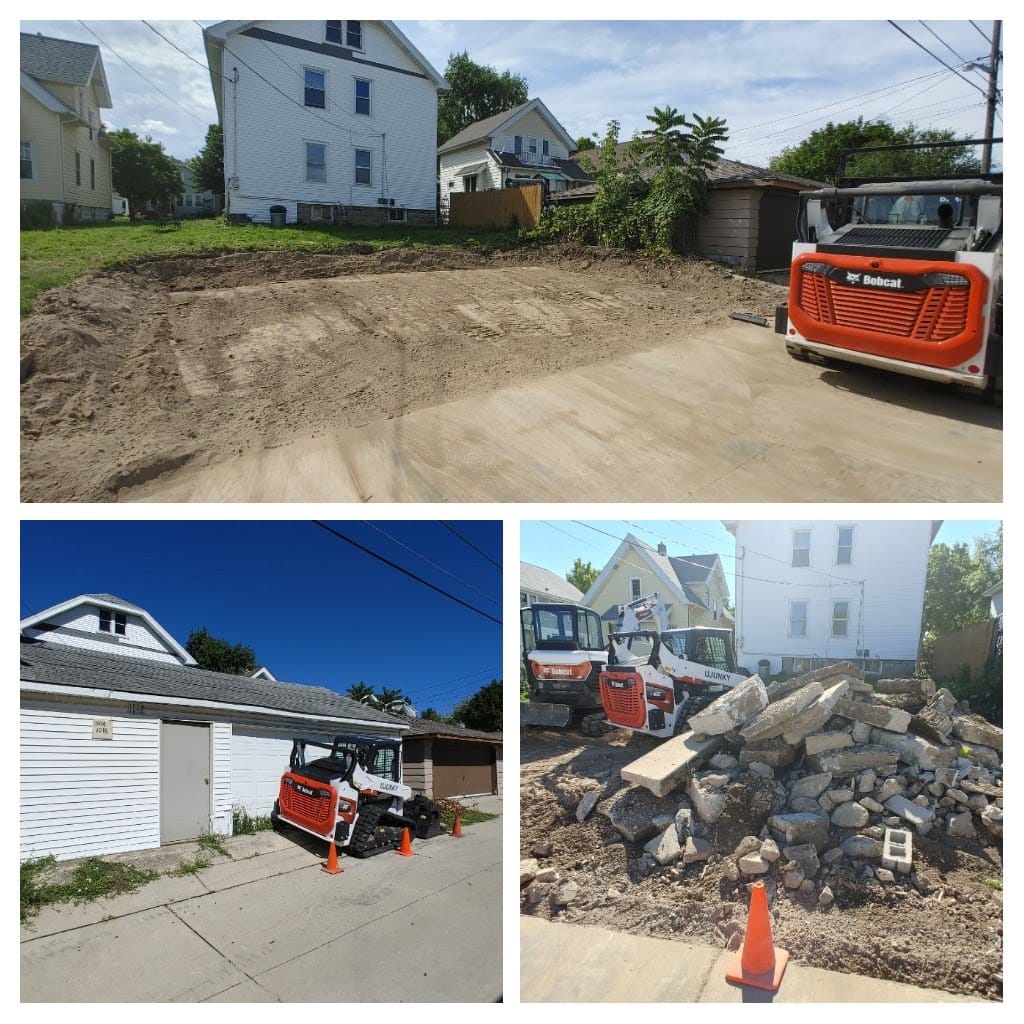
AFTER DEMOLITION
Why Milwaukee homeowners choose UJUNKY
Garage Demolition Trust Signals
UJUNKY is a strong fit for Milwaukee garage demolition when the job involves a leaning structure, city order, tight access, permit paperwork, debris haul-away, or final inspection closeout.
Rated by real UJUNKY customers
Milwaukee garage demolition and raze-order experience
Permit filing and DNS closeout coordination
Written plan before demolition starts
Structure debris hauled away and site cleaned
5.0 Google review"UJUNKY handled our garage demo in one day. Super professional and left the site spotless."
5.0 Google review"Best quote in Milwaukee. No hidden fees, and the team was polite and efficient."
When Demolition Is the Right Call (and When It Isn't)
Not every old garage needs to come down. We've talked customers out of demolitions before. If the structure is sound and the issues are cosmetic, repair can be the better path. But these are the honest signals that it's time:
- The City of Milwaukee has issued a raze order, repair order, or condemnation notice with a deadline. Once an enforcement action is on file, demolition is almost always faster and cheaper than the alternative.
- The garage is visibly leaning more than a few inches off plumb. Once the lean starts, it accelerates.
- The roof is sagging, has caved in partially, or is letting water into the structure.
- The sill plate has rotted out and the walls are no longer tied to the slab.
- You've gotten a repair quote and it's in the same ballpark as a demolition quote (often the case for older structures).
- You're selling the property and the garage is hurting the appraisal or scaring buyers off.
- Your homeowner insurance is threatening to drop the policy or refuse claims because of the structure.
If you're not sure whether your garage is in demo territory yet, that's a normal question. The site visit answers it. We'll tell you straight what we see.
Common Questions About Garage Demolition & Raze Orders
What is a raze order in Milwaukee?▾
A raze order is a formal notice from the Milwaukee Department of Neighborhood Services (DNS) directing the property owner to demolish a structure that's been declared unsafe, structurally compromised, or non-compliant with city code. It's typically issued for garages that are leaning, partially collapsed, fire-damaged, or otherwise dangerous. The order specifies a deadline for compliance and is recorded against the property until resolved.
How long do I have to comply with a Milwaukee raze order?▾
Deadlines vary by severity. DNS sets shorter deadlines (sometimes weeks) for structures that pose an immediate collapse or safety risk, and longer deadlines (60–90+ days) for less severe cases. Read your specific order. The deadline is stated on the document. The city does not generally extend deadlines for homeowners who are still shopping for contractors, but they will accept demonstrable progress: a permit pulled, a contractor scheduled, a demolition date set.
What happens if I ignore a Milwaukee raze order?▾
The city escalates. After the deadline passes, DNS can pursue several paths: financial penalties that accumulate, an order for the city itself to demolish the structure (with the cost charged back to the property owner, typically at significantly higher rates than a private contractor), or a special assessment placed against the property as a lien. The city's demolition costs can be 2–3x what UJUNKY would charge, and the lien stays attached to the property until paid, affecting refinancing, sale, and title. Ignoring the order is uniformly the most expensive option.
Can UJUNKY handle the city compliance side of demolition?▾
Yes, end-to-end. We pull the demolition permit (included in the $100 down payment), do the demolition, post the permit at the job site as required, and then coordinate the final inspection with DNS so the case officially closes in the city's records. You don't need to talk to inspectors, fill out city forms, or chase paperwork. From your side, the order arrives, you call us, and a few weeks later it's resolved.
How much does garage demolition cost in Milwaukee?▾
Pricing depends on size, material, access, slab scope, debris volume, and whether the garage is wood-frame, brick, block, oversized, or two-story. A site visit lets us give you a real written quote instead of guessing from photos alone. Leaning, condemned, or raze-order status affects urgency and planning, but size and material still drive the scope.
What if my garage has a raze order?▾
Bring the raze order to the site visit. We review the deadline and cited issues, pull the demolition permit, remove the garage, haul away debris, and coordinate the final inspection so the city case can close.
Do you handle condemned garages?▾
Yes. Condemned and unsafe garages are a major part of our Milwaukee demolition work. We plan around the condition of the structure, city paperwork, permit requirements, neighbor proximity, and cleanup.
What if my garage is leaning toward my neighbor's property?▾
That's one of the most common situations we see, and it's exactly why the site visit and the planning step matter. We use a controlled-drop approach for leaning garages, the demolition is sequenced so the structure comes down where we want it, not where gravity wants it. We've never put a garage on a neighbor's property. The lean itself doesn't change the price; size and material do.
How long does a garage demolition take?▾
The actual demolition is usually part of a single day for a standard wood-frame one-car or two-car garage. Brick or concrete-block garages can stretch into a second day depending on size. From your first phone call to a finished, cleared lot with the city case closed, the typical timeline is two to three weeks: site visit, plan, permit, demolition, and final inspection combined.
Do you remove the debris?▾
Yes. Garage demolition includes hauling away the structure debris and cleaning the work area. We do not leave a pile for you to figure out after the garage comes down.
Do you remove the slab?▾
We can, but it is optional. Many homeowners leave the concrete slab for parking or future use. If you want it removed for landscaping, drainage, or new construction, we can include slab removal in the scope.
Do I have to be home during the demolition?▾
No. Most customers go to work and come home to a cleared lot. We coordinate access to the property ahead of time so the crew can get in and out without you being there. We send photos when the job is done.
Do you handle the permit, or do I need to pull it?▾
We handle the permit. The City of Milwaukee permit fee is included in the $100 down payment, and we file the application, post the permit on site, and close it out when the work is complete. You don't need to call DNS or fill out any forms.
What about the concrete slab? Does it have to come out?▾
No. Most customers leave the slab. It makes a great parking pad, basketball area, or future garage foundation. If you want the slab removed, for landscaping or new construction, we can break it out and haul it away as part of the same job. Bringing in fill dirt afterward is something most customers handle separately with a landscaping company.
Are you licensed and insured?▾
Yes. We carry the licensing and liability coverage Milwaukee requires for demolition contractors. The city won't issue a permit without it. We can provide proof of insurance on request before the job starts.
What if my garage has old siding or shingles?▾
Older garages can have brittle siding, layered roofing, loose debris, or material that changes how the teardown is staged. We'll look at the condition, access, and debris during the quote so our guys can plan the demolition and cleanup properly.
Why Milwaukee Homeowners Choose UJUNKY
- Fast scheduling. Site visit within days, demolition typically inside two weeks. Priority work on raze-order jobs.
- Permit handled. $100 down covers the city permit. You don't talk to DNS.
- Final inspection coordinated. We close the case with DNS for raze-order jobs. The order resolves in the city's records.
- Full haul-away included. No surprise debris fees, no second contractor needed.
- Tight-lot expertise. Most Milwaukee garages are wedged in. We know the moves.
- Honest pricing. The number in the plan is the number on the invoice. Lean and condition don't push the price up.
Built for Garage Jobs. Equipped for Bigger Demolition.
Garage demolition is one of the fastest jobs we do, and it's where most of our customers find us. But it's not the limit of what UJUNKY handles. We do full residential and building demolition across Milwaukee: condemnation response, fire-damaged structures, interior selective demolition, pool removal, and concrete work. Same crew, same equipment, same process.
Areas We Serve
We provide garage demolition across Milwaukee and the surrounding suburbs and metro area. We typically work within about 30 miles of downtown Milwaukee.
Need Your Garage Removed?
Whether you're staring at a raze order, watching a leaning garage get worse each week, or just trying to clear a lot for what's next, the path forward is the same: a phone call. Site visit within days. Permit pulled. Demolition done. Final inspection coordinated. Case closed.
Contact Our Milwaukee Demolition Team
Prefer to talk? Call 414-533-8000