Milwaukee Demolition Contractor
From single-car garages to fire-damaged houses to multi-unit commercial buildings. UJUNKY is a Milwaukee-based licensed demolition contractor with the equipment, crew, and permit experience to handle anything from a one-day concrete pad removal to a multi-week structural demolition. Same operational discipline whether the job is $2,800 or $80,000.
Licensed and insured. Permits handled. Final inspections coordinated. Insurance-quote turnaround in days for fire-damage homeowners.
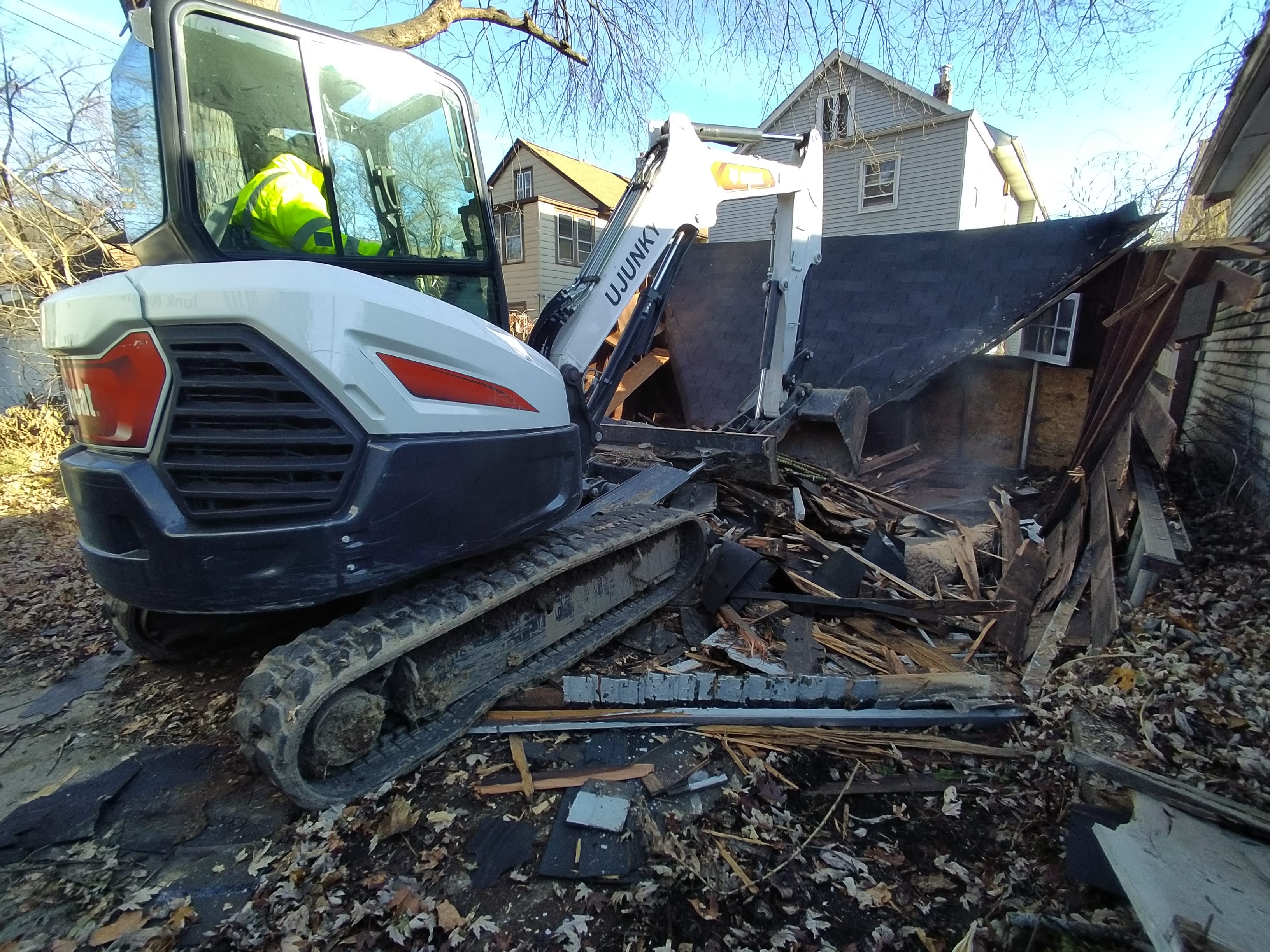
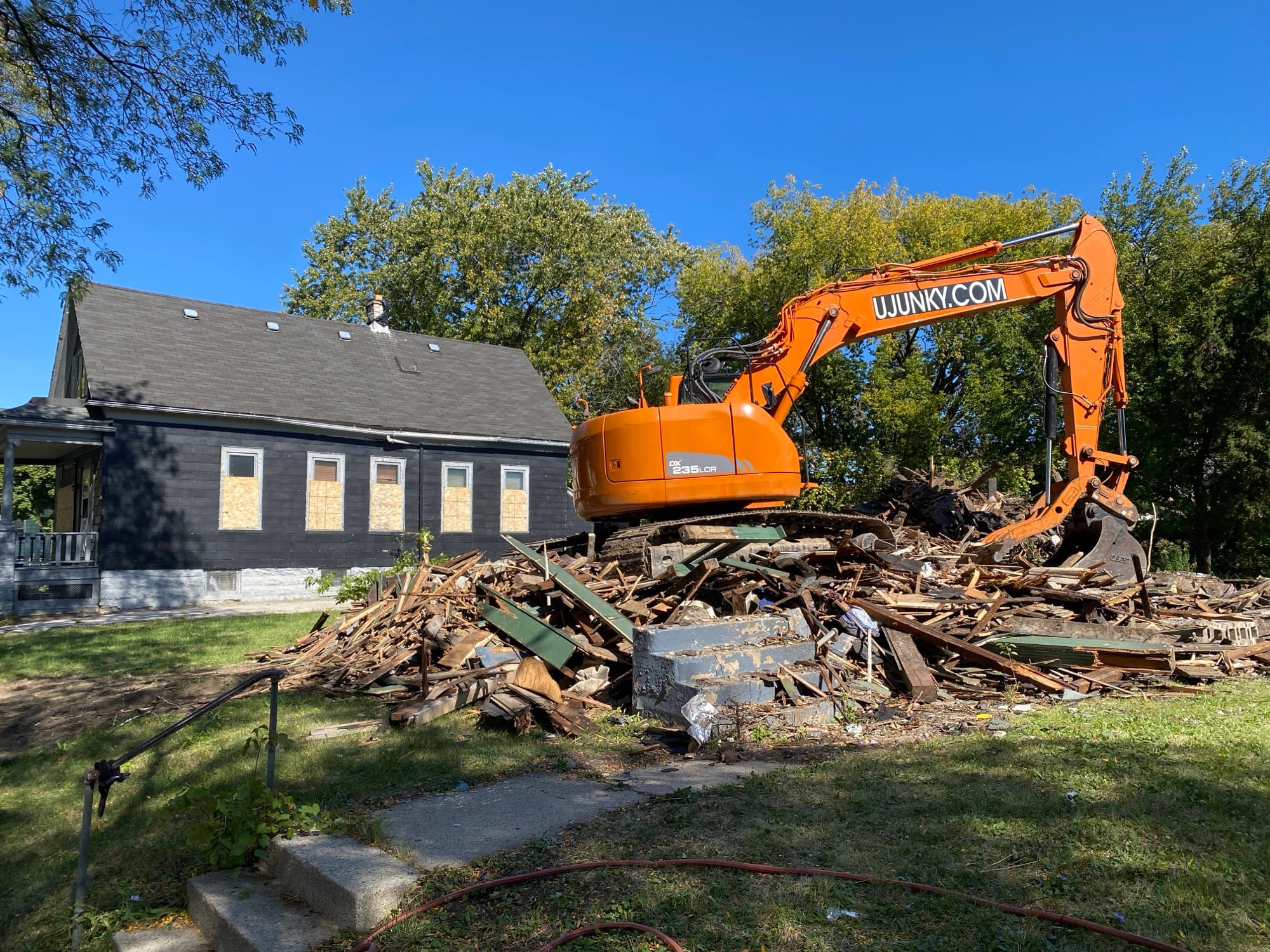
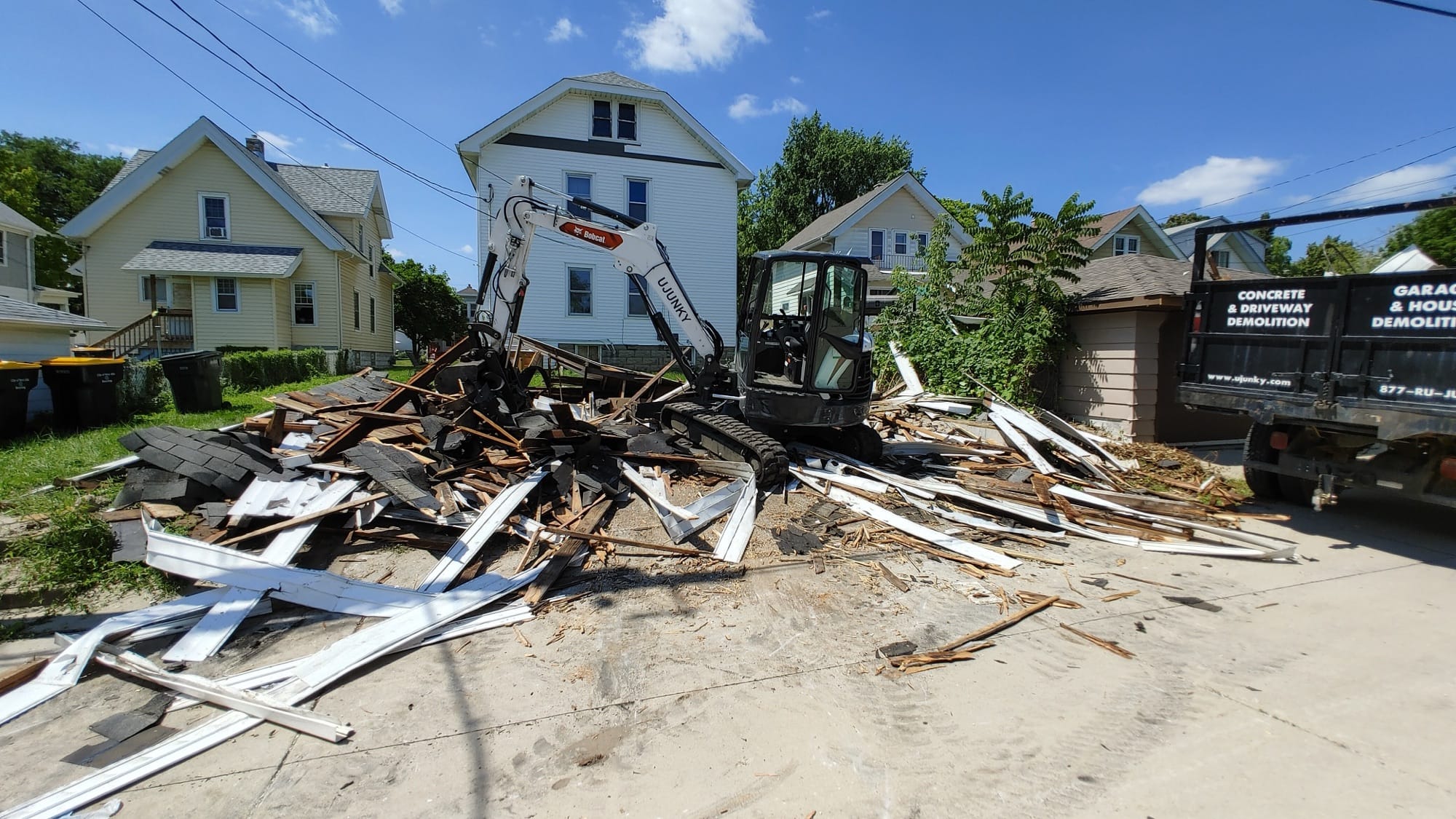
Recent UJUNKY demolition work: garages, fire-damaged residences, and commercial-scale building removals across the Milwaukee metro.
A Real Demolition Contractor, Not a Junk Hauler with a Sledgehammer
The Milwaukee market has a lot of "demolition" providers. Some are general contractors who farm out the demo work. Some are junk haulers who'll bring a friend with a sledgehammer if you ask. A few are actually licensed demolition contractors with the equipment, crew, insurance, and permit experience to do this work safely and to code. UJUNKY is in that last category, and it matters.
Demolition work in Milwaukee falls into a real regulatory framework. The Department of Neighborhood Services (DNS) requires permits before structures come down. Licensed contractors carry the insurance documentation the city requires before the permit gets issued. Disposal happens at licensed transfer stations with weighed and tracked loads. For house and building demolition, older structures may also require asbestos inspection/reporting before permit approval. Final inspections happen on city orders, and the case doesn't close until the inspector signs off.
That's the framework we work in for every job, whether it's a single garage, a fire-damaged home with an active insurance claim, or a multi-unit commercial teardown. Same operational discipline. Same paperwork. Same safety standards. Same finish: clean lot, debris hauled, paperwork closed.
Licensed and insured
Wisconsin demolition contractor licensing plus general liability and worker's comp coverage. The city won't issue a permit without it.
Permits handled
We pull every demolition permit, post it on site, and coordinate the final inspection so the case officially closes with the city.
Full haul-away
Debris weighed, tracked, and disposed of at licensed facilities. No second contractor needed. No surprise dump fees.
House Fire? You Need a Demolition Quote for Your Insurance Adjuster.
We turn around insurance-ready demolition estimates fast.
If your house was just damaged or destroyed in a fire, the next phase of your life is going to involve more paperwork than you've probably ever filled out, and the insurance company is going to want documentation for everything. One of the things they need before they can finalize the claim and release funds for the rebuild is a written demolition estimate from a licensed contractor. That's where most fire-damage homeowners get stuck, calling around for quotes when they're already exhausted from dealing with everything else.
We make this part fast. Site visit within days. Written, professional, insurance-ready demolition estimate delivered shortly after: itemized, on letterhead, with our license and insurance information attached. You hand it to your adjuster, the claim moves forward, and we pick the project back up when the claim is approved and you're ready to schedule. We don't pressure you to demo before the claim settles. That's not how this should work.
Insurance-ready quote
Itemized written estimate on UJUNKY letterhead with license and insurance documentation attached. The format adjusters expect.
Fast turnaround
Site visit within days. Quote shortly after. We know speed matters when you're trying to start a claim.
Schedule when claim approves
We don't pressure you to demolish before the insurance side is settled. The quote holds; we schedule when you're ready.
A note on how the insurance side works
We provide the documentation. You and your adjuster handle the claim itself. We don't communicate with insurance companies on your behalf. Most fire-damage homeowners find that having a clean, professional demolition quote in hand makes the conversation with the adjuster much smoother and faster than if they were working without one. Your adjuster has seen hundreds of these. So have we. The quote we write is structured to give them what they're looking for.
The Demolition Services We Provide
Every demolition job is different, but the core services break down into a handful of categories. Here's what we do, ordered roughly by how often we're called for each.
Commercial & multi-unit demolition
The bigger half of our revenue work. Multi-unit residential buildings, mixed-use structures, retail buildings being prepped for redevelopment, warehouses, distressed commercial properties going to investors. These are jobs with bigger equipment, longer timelines, more coordination, and higher stakes, and they're where having a licensed demolition contractor instead of a junk hauler with ambitions actually matters. We work directly with developers, asset managers, property holding groups, and general contractors on the planning side, and we handle the demolition execution end-to-end.
Typical scope: site assessment, planning, permitting, utility disconnects coordination, structural demolition, debris removal, final grade, inspection coordination, project closeout documentation.
building demolition in Milwaukee →Full house demolition
Most of our house demolition leads come from fire-damaged homes where the structure can't be salvaged and the homeowner is working with their insurance company on the claim. We also handle non-fire teardowns, condemned structures, properties where the rebuild is more economical than the renovation, and developer-driven full-lot clears, but fire-damage cases are the most common path. Either way, the job is the same: utility disconnect coordination, demolition permit, foundation-to-cap demolition, debris haul-away, slab/foundation breakout if specified, and final inspection coordination.
Typical timeline: 2–4 weeks of active work from permit issuance to cleared lot, depending on house size, foundation type, and city schedule for utility cutoffs. For insurance claims, the timeline starts after the claim approves. See the section above for how we handle the quote phase.
house demolition in Milwaukee →Garage demolition
Where most homeowners find us. Standard two-car wood-frame garages run $3,290–$3,890. Single-car wood: $2,800–$2,900. Brick or concrete-block: $4,290–$8,000. Two-story coach-house garages: around $8,000. We handle leaning garages, raze-order garages, fire-damaged garages, and pre-sale teardowns. Lean does not push the price up. Size and material do.
garage demolition in Milwaukee →raze-order garage demolition →Concrete & driveway removal
The most common demolition request after garages. Concrete driveways that have heaved, cracked, or settled past the point of patching. Concrete slabs left behind after garage demolition (when the homeowner wants the slab out for landscaping or new construction). Sidewalk slabs, patio slabs, foundation pads, and unwanted concrete steps. We saw-cut clean edges where it matters, break out the concrete with the right equipment, and haul the debris to recycling facilities where it's processed back into aggregate.
See concrete & driveway removal page →Interior gut-jobs for renovation contractors
Renovation projects need a tear-out phase before the rebuild starts, and most general contractors don't want their finish carpenters swinging sledgehammers. We come in, gut the interior to the studs (or further), haul out the drywall, flooring, cabinets, fixtures, and trim, and turn the space over swept and ready for the rebuild. We work in occupied buildings, on tight schedules, and with dust-control measures when the job calls for it.
See interior demolition page →Barn, shed & outbuilding teardowns
Older Milwaukee-area properties, and especially properties at the suburban edge, often have outbuildings that have outlived their purpose. Old wood barns, falling-down sheds, detached workshop structures, chicken coops, smokehouses. We handle these as efficient single-day or two-day jobs depending on size. Material is typically wood-frame, hauling is straightforward, and the slab decision is the same as with a garage: leave the pad or break it out.
Deck & porch demolition
Wood decks rot. Pressure-treated lumber from the 1980s and 90s contained chemicals that make modern disposal a real consideration. Wraparound porches with rotted joists become safety problems. We tear out decks and porches, separate the lumber from the metal hardware for proper disposal/recycling, deal with the concrete footings (leave them or break them out), and haul everything off in one job. Often a precursor to a deck rebuild. We coordinate timing with your contractor.
Pool & hot tub removal
Both above-ground and in-ground. In-ground pool demolition has two paths: partial fill (break the bottom, collapse the walls inward, fill with clean material) or full removal (excavate everything, haul it out, fill the hole). The right answer depends on your future plans for the space and the city's requirements. Hot tubs are simpler: drain, disconnect, lift out, haul away.
See pool demolition page →Mobile home demolition
Trailers and manufactured homes across Southeast Wisconsin. We handle the demolition, debris haul-away, and the disposal coordination that mobile homes specifically require. Common service areas include Milwaukee, Kenosha, Racine, and Pleasant Prairie.
See mobile home demolition page →How We Work, Across Every Job
The size of the structure changes the timeline, the equipment, and the price, but the operational discipline is the same on every job. Whether you're hiring us for a $2,800 garage or an $80,000 commercial teardown, here's what to expect.
Site visit and assessment
We come out and look at the structure in person. For commercial and multi-unit jobs, the site visit is where we walk the property with the developer or asset manager, identify utility disconnect requirements, flag potential asbestos/lead-paint concerns in pre-1978 structures, look at access for equipment, and document existing conditions of neighboring property. For fire-damage homes, the site visit is where we assess what came through the fire and structure the quote your adjuster will need. For smaller jobs, the assessment is faster but follows the same logic. Bring any city orders, condemnation notices, insurance correspondence, or developer specs. We read them on site.
Plan, scope, and price
We work out exactly how the demolition will be sequenced, which structures come down in what order, how the equipment moves through the site, how neighboring property is protected, what the disposal path looks like, what the timeline is. You get a written scope and a single number that covers everything: labor, equipment, permit, disposal, final inspection coordination. No surprise add-ons. For fire-damage and other insurance-driven jobs, the quote is structured for adjuster submission.
Permits and utility disconnects
We pull the demolition permit. For house and commercial jobs, we also coordinate the utility disconnect schedule with the gas, electric, and water providers (these are typically required before a structure can come down and add real time to the timeline if not started early). For smaller jobs like garages or concrete pads, only the demolition permit applies, and that's included in the $100 down payment.
Demolition execution
Crew, equipment, and process matched to the job. Garage and concrete jobs are typically part of a day. Single-family house demolitions are usually 1–3 days of active work. Commercial and multi-unit jobs run longer with more sequencing. In every case, we manage the site as an active demolition zone: fencing where required, neighboring-property protection, dust control on dry days, and traffic management when work touches public right-of-way.
Debris removal and final grade
Everything that came out of the structure goes to the appropriate licensed facility: metal to scrap recyclers, clean concrete to aggregate recycling, mixed construction debris to transfer stations. The site gets graded to the spec the job calls for. For residential teardowns, that's typically rough grade with the slab broken out (or left in) per the customer's choice. For commercial, it's whatever the developer's next-phase contractor needs.
Final inspection and case closeout
We coordinate the city's final inspection ourselves and stay engaged until the demolition permit and any associated city orders are officially closed in the records. For commercial jobs, we also provide the project closeout documentation that developers and lenders need for their files: disposal manifests, before/after photos, permit records.
What a Real Demolition Contractor Actually Does (And Why It Matters)
For most homeowners, demolition isn't a regular purchase. The category itself is unfamiliar, and a lot of people end up calling a junk hauler, a handyman, or a general contractor's friend before they realize they need a real demolition contractor. The differences between those options aren't cosmetic. They directly determine whether your job goes smoothly, stays on budget, and leaves you compliant with the city.
Three things separate a real demolition contractor from the alternatives, and all three matter for any job bigger than a deck:
1. Licensing and insurance the city actually requires
A real demolition contractor carries Wisconsin licensing for the work plus general liability and worker's comp coverage at levels the city specifically asks for. Without that documentation, the demolition permit doesn't get issued. The same documentation is what insurance adjusters expect to see on a written quote for a fire-damage claim. A handyman with no license can absolutely tear down your garage, and then you find out at the final inspection that the city won't sign off because the permit shouldn't have been issued. Fixing that mistake is expensive and slow.
2. Equipment built for demolition, not for general construction
Excavators with the right attachments. Skid steers for tight access. Dump trucks rated for construction debris. Equipment for concrete saw-cutting and breakout. Most general contractors don't own this gear because they don't need it for routine work. The result is that when a GC takes on a demo project, they either rent everything (and pass the cost through) or take three times longer to do the work with smaller equipment that's not really suited to it.
3. Disposal infrastructure and tracking
Demolition produces a lot of weight. A typical garage demolition load is several tons, and a house demolition is many times that. Real demolition contractors have established relationships with licensed transfer stations, scrap metal recyclers, and concrete aggregate recyclers, and they track disposal weights for every load. Junk haulers without those relationships either pay retail tipping fees that get passed through or, in the worst cases, dump illegally, which becomes the property owner's problem if it ever surfaces.
None of this matters for hauling a couch out of a basement. All of it matters when there's a structure coming down, a city permit involved, an insurance claim moving forward, and a property to leave clean.
Have a Demolition Project? Let's Talk Specifics.
Site visits scheduled within days. Quotes typically delivered the same week. For fire-damage homeowners, we know speed matters. We prioritize insurance-quote turnaround. For commercial and multi-unit jobs, we work directly with developers, asset managers, and general contractors on the planning side, not just the execution.
Common Questions About Demolition
I just had a fire. How fast can I get a demolition quote for my insurance company?▾
We can usually have a site visit scheduled within a few days of your call, and a written, professional, insurance-ready quote in your hands shortly after. The quote comes on UJUNKY letterhead with our license and insurance information attached, the format adjusters expect. You hand it to your adjuster, and we pick the project back up when the claim is approved and you're ready to schedule. We don't pressure you to demolish before the insurance side settles.
Will you talk to my insurance adjuster directly?▾
We provide the documentation. You and your adjuster handle the claim itself. We don't communicate with insurance companies on your behalf. What we give you is a clean, professional, itemized written quote that's structured the way adjusters expect to see one. Most fire-damage homeowners find that the conversation with the adjuster goes much faster when they're working from a real quote instead of a verbal estimate.
Do I need a permit to demolish a structure on my property?▾
In Milwaukee and most surrounding municipalities, yes. Any structure with walls and a roof typically requires a demolition permit before it can come down, and the city wants the licensed contractor's information on the permit. Concrete pads, decks, and pure surface removal often don't need a permit, but anything that was once a building usually does. We pull every permit our jobs require, and the cost is included in your quote.
How do I choose a demolition contractor in Milwaukee?▾
Three things to verify before signing anything: (1) they're licensed and insured at the levels Milwaukee requires, ask for the certificate of insurance, (2) the quote includes the permit, the haul-away, AND final inspection coordination (a lot of cheap quotes leave city closeout for you to figure out), and (3) they have specific experience with the type of structure you're tearing down. A contractor who does mostly garage demolitions might not be the right fit for a multi-unit teardown, and vice versa. For fire-damage and insurance-driven jobs, also confirm they can produce the kind of written, itemized quote your adjuster needs.
How much does demolition cost?▾
Hugely variable by structure type. Garages are $2,800–$8,000 depending on size and material. Concrete driveway and slab removal scales with square footage. Single-family house demolitions typically run $15,000–$30,000+ depending on size and foundation type. Commercial and multi-unit jobs are quoted individually based on scope. The constant across all of these: pricing is driven by size, material, access, and disposal weight, not by how compromised or run-down the structure is.
Do I need to handle utility disconnects, or do you?▾
For house and commercial demolitions, we coordinate the utility disconnects with the gas, electric, and water providers as part of the project. The actual disconnect work is done by the utility companies themselves. We just schedule it and verify completion before demolition starts. For garage and concrete jobs, utility disconnects usually aren't needed because there's no service running to the structure.
What about asbestos in older Milwaukee structures?▾
For house and building demolition, older structures may require asbestos inspection/reporting before permits move forward. If a report identifies asbestos-containing materials, licensed abatement has to be handled before regular demolition starts. We don't do the abatement ourselves, but we help coordinate the sequence so the project keeps moving.
What happens to the debris after demolition?▾
Sorted at the source where possible and routed to the appropriate licensed facility. Metal goes to scrap recyclers. Clean concrete goes to aggregate recycling and is processed back into road base. Mixed construction debris goes to licensed transfer stations. We don't dump and we don't dodge tipping fees. The disposal cost is in your quote, and the loads are tracked.
Are you available for commercial and developer-driven projects?▾
Yes. Commercial and multi-unit demolition is the bigger half of our revenue work. We work directly with developers, asset managers, holding companies, and general contractors on planning, permitting, sequencing, and execution. For larger projects, we provide pre-bid site walks, scope documentation, and project closeout files (manifests, photos, permit records) that lenders and investors typically need.
Are you licensed and insured?▾
Yes. We carry Wisconsin demolition contractor licensing plus general liability and worker's comp at the levels Milwaukee requires for permit issuance. Certificate of insurance available on request before work begins.
Why Choose UJUNKY
- Real demolition contractor. Wisconsin-licensed, properly insured, with the equipment to do the work right.
- Fast insurance-quote turnaround. Site visit within days, written quote shortly after. Built for fire-damage and other claim-driven jobs.
- Permits and final inspections handled. We pull, post, and close out the city paperwork on every job.
- Full debris haul-away. No surprise dump fees, no second contractor.
- Operational discipline at every job size. $2,800 garage or $80,000 commercial, same standards.
- Honest pricing. The number in your quote is the number on your invoice.
Service Pages by Project Type
For more detail on a specific kind of demolition, jump to the dedicated page.
Or jump to review our step-by-step demolition permit process, sewer line replacement in Milwaukee, Milwaukee demolition permits, timeline expectations, or our condemnation questions guide.
Why UJUNKY is the demolition contractor
Service-Wide Trust Signals
Across garage, house, building, concrete, interior, pool, mobile home, and condemnation work, UJUNKY keeps the project understandable: site review, written quote, permit path, demolition, debris haul-away, and clean closeout.
Rated by real UJUNKY customers
Garage, house, building, and structural demolition
Licensed, insured, permit-aware project planning
Written estimates with scope and timeline clarity
Debris routed to appropriate licensed facilities
5.0 Google review"UJUNKY handled our garage demo in one day. Super professional and left the site spotless."
5.0 Google review"Best quote in Milwaukee. No hidden fees, and the team was polite and efficient."
5.0 Google review"We use UJUNKY for all our commercial strip-outs. Highly reliable and fully bonded."
Main Services FAQ
What kinds of demolition does UJUNKY handle?
UJUNKY handles garage, house, building, interior, pool, mobile home, concrete, and condemnation-related demolition across Milwaukee and Southeast Wisconsin.
Do you handle permits and final inspections?
Yes. We pull permits, post them on site, coordinate the work, and close out the final inspection so the case is finished properly with the city.
Where should I start if I am not sure which page matches my project?
Start with the Answers Hub for plain-language guidance, then jump to the dedicated service page that matches your project type.
Do you offer financing?
Yes. You can pay monthly through Sunbit or Klarna when you pay the invoice. Pick "Pay monthly" at checkout, answer a few questions, and get an answer in about a minute. Sunbit spreads it over up to 18 months and covers jobs up to $19,999. Klarna goes up to 36 months. There is no extra charge from us for paying this way.
Areas We Serve
Demolition services across Milwaukee, the inner suburbs, and Southeast Wisconsin. We typically work within roughly 30 miles of downtown Milwaukee for residential jobs, with broader coverage for commercial and developer projects.
Ready to Start the Demolition Conversation?
Whether it's a fire-damage insurance claim, a leaning garage, a developer-driven commercial teardown, or a concrete pad you need broken out, the path forward is the same: a phone call. Site visit within days. Written quote shortly after. Real number, real timeline, real demolition contractor.
Contact Our Milwaukee Demolition Team
Prefer to talk? Call 414-533-8000